Tuesday, December 18, 2012

FAQs About Crowns and Bridges


FAQs About Crowns and Bridges


What Is A Crown? 

A crown, also referred to as a cap, is a covering that is placed over a tooth. Crowns are placed to protect a tooth from failure, such as breaking, or to replace parts of a missing tooth. 

What Are Crowns Made Of? 
Crowns can be made of many different materials. The most common crown today is a porcelain fused to metal crown. There is a thin metal casting made to fit over your tooth and then porcelain is baked over the metal to make it look like a tooth in color, shape, and form. Crowns can also be made entirely of porcelain with no metal substructure. These all porcelain crowns are mostly reserved for the front of the mouth where aesthetics are the main concern, not strength. Crowns may also be made from gold. Gold is the best material for the back of the mouth, thus the term “gold standard” in dentistry. Your dentist will discuss with you which type of crown is best for you. 

Is It Permanent Or Temporary? 
Permanent! However, because it is man-made, it does have a lifespan and may need to be replaced several times throughout a lifetime.

How Should I Care For A Crown? 
It is important to remember that the crown is just a covering over your natural tooth and regular care of the underlying tooth is necessary for the longevity of the tooth and crown. Since your crown is cemented on, you should take care to avoid the crowned tooth when eating very sticky foods as they may pull the crown off. If this happens it is very simple to fix, just bring the crown to your dentist and it can be recemented on very quickly and easily. 


What Is A Bridge? 
A bridge is a device that is used to literally bridge the gap between teeth.  A bridge is made up of two crowns to attach to teeth on either side of the gap with a false tooth, or set of teeth, in between. It prevents other teeth from moving due to the missing tooth or teeth and restores your smile. Bridges are ideal to replace one or many missing teeth.

What Is A Bridge Made Of? 
Bridges can be made up of a metal substructure with porcelain fused over it or entirely of porcelain. 

Is It Permanent Or Temporary? 
Just like a crown, a bridge is permanent with an expected lifespan. It should be expected to be replaced over the course of a lifetime. 

How Is A Bridge Attached?
It takes at least 2 visits to fabricate a bridge. During the first visit, your teeth will be prepared for a bridge.  A mild anesthetic is applied to your mouth and the dentist will clear an area surrounding the teeth on each side of the space to accommodate for the bridge.  An impression will then be taken of your mouth and sent to a lab, where the bridge will be made.  Your new, permanent bridge will arrive a few weeks later and will be fitted, checked, and adjusted and, finally, cemented to your teeth.

How Should I Care For A Bridge? 
It’s important that the bridge is brushed and flossed just like natural teeth. Extra care needs to be taken to floss underneath any of the replacement teeth using either a floss threader or superfloss. 

A Family Dental Care Center: Dr. Seth Rosen
2030 West Main St
Norristown, PA 19403
610-631-3400


Tuesday, December 4, 2012

$50 Extraction Fundraising Event!

$50 Extractions! Saturday, December 15 Only!


Help support the family of Officer Mike Hougnon, 
a West Norriton Police Officer and patient of our office. 

Officer Mike Hougnon recently suffered a brain aneurysm. Read his story on the Norristown Patch by clicking here. We are doing our part in helping his family pay medical bills for the numerous surgeries and months of rehabilitation that he will require by holding a fundraising event offering:

$50 Extractions 
+ FREE Exam and Digital Xray 
ONE DAY ONLY
Please join us on 
Saturday, December 15
9am-1pm
 *Queue starts outside our office at 8am
We are located at 2030 West Main Street in West Norriton, PA
Absolutely ALL proceeds go directly to 
the family of Officer Mike Hougnon! 

**This is a great opportunity for anyone who seriously needs to get a tooth pulled and would not be able to afford an extraction at the usual price of well over $100. 

Planning on coming? 
Here's what you need to know: 
1. No appointment necessary! Patients will be treated on a first come, first serve basis. 

2. CASH ONLY. We can only accept cash in order to ensure that every penny and every effort goes directly to supporting our cause. 

3. You MUST bring a filled out Health History Form! You can print out this form on our website or by clicking here. You will not be seen without this form! 

4. Due to time constraints we can not extract impacted teeth. 

If you aren't in need of dental services but would still like to contribute we will collect donations at our office as well. Donations can be made to Continental Bank C/O The Hougnon Family.

Questions? 
Email us at drsethrosen@aol.com
or visit our website at 

Friday, November 30, 2012

FAQs About Dentures

Everything You'd Ever Need to Know About Dentures! 


What are dentures?
A denture is a removable replacement for missing teeth. There are two main types of dentures: full dentures and partial dentures. Full dentures are used when all the teeth are missing while partial dentures are used when some natural, healthy teeth remain. 

Does insurance cover the cost? 
Many dental insurance companies pay for a portion of the cost of dentures. Since all insurances are different it’s important to check with your carrier to find out what they will cover.  We also offer financing for patients without dental insurance. 

Will my dentures need to be replaced?
Dentures will need to be relined, rebased or remade over time due to normal wear and tear. It’s important to replace severely worn or ill-fitting dentures before they cause problems such as sores and infections. 

What do dentures feel like?
At first, a new denture will probably feel slightly awkward and loose while your cheek and tongue muscles learn to keep the dentures in place. It only takes a few weeks before you become fully accustomed to your new dentures. It is also very common to feel irritation or soreness at first, if these problems persist you should revisit your dentist.  An overdenture will never feel loose or move around your mouth and may be the best option to solve discomfort.

Can I eat while wearing dentures?
Yes! Learning to eat with your dentures will take some practice- you should start with soft foods cut into small pieces and chew slowly. You will always have to be careful of very hard foods and hot food and beverages. Many people who have trouble eating with full dentures find that an overdenture is the better option for them. 

How often should I visit my dentist? 
It is recommended that denture wearers visit the dentist once a year. 

Will they change how I look and speak? 
Like eating, speaking with dentures will need some practice. Properly fitting dentures will not alter your speech after you get used to wearing them. Your dentures will be made to very closely resemble your natural teeth and will not hinder your appearance or look fake or noticeable- they may even improve the look of your smile and profile! See the below pictures showing how dentures improve the look of your face and profile. People who do not replace their missing teeth tend to have a “sunken in” look and can greatly improve the look of their face by using dentures.  

A Family Dental Care Center: Dr. Seth Rosen
2030 West Main St. 
Norristown, PA 19403

Thursday, November 15, 2012

FAQs About Partial Dentures

All You'd Ever Need or Want to Know About Partial Dentures! 


What Is A Partial Denture? 
A partial denture is a removable device used to replace one or more missing teeth. Most partial dentures use clips or clasps to hold onto remaining teeth. Many times the teeth the partial denture is to be clipped to must be changed in minor ways to best allow this to happen. Most simply, a partial denture is a retainer with teeth added. 

What Is A Partial Denture Made Of? 
The retainer portion may be made out of metal, nylon, or acrylic. The teeth are plastic, which is much softer than your natural teeth, so care must be given to eating hard or crunchy foods. In fact, your diet may need to change based upon what foods you can chew well with your partial denture. 

Is It Permanent Or Temporary? 
In our office, a partial removable denture is seen as a temporary fix.  All partial dentures can cause future problems such as loosening of the teeth they are clipped to, wear on the teeth they are clipped to, gum soreness, and continued loss of jawbone. With this in mind we always recommend that a long term plan should be in place for the replacement of your missing teeth so that these problems can be avoided. 

How Long Can I Wear It? 
All partial dentures need to be removed after every meal, cleansed well, and should be left out at night to give your gums a rest. Failure to leave the partial out at night can cause infections and/or increase the rate at which the remaining teeth fail.

There are four main types of partial dentures in use today. We will make a recommendation as to which type we feel is a best fit for your particular situation.

Healing Partial 
A “healing partial” is constructed out of acrylic with acrylic teeth. The clips are thick wire that is bent around a few of the remaining teeth. We call this a “healing partial” because it is the best partial for us to use if we are going to remove teeth and need something to replace them immediately. This allows us to make sure that our patients never go without teeth. This is the least expensive option for a partial denture, but also the shortest expected usable lifespan. The acrylic base and teeth can stain and show wear within a few months and the clips tend to lose shape and hold.

Cast Metal Partial  
A custom cast frame is made from a mold of your remaining teeth. Many times the remaining teeth must be slightly modified to allow the casting to seat and hold properly.  After the cast frame has been made and we make sure that it fits well, we will re-send the partial to the lab to have the teeth added. The teeth are still acrylic, but the underlying metal makes everything much stronger and longer lived. This type of partial is a fantastic choice for many of our patients, but the trade off is aesthetics. In some instances the shiny metal of the framework may be seen. This design also tends to put a lot of force on the clasping teeth, so attention and care must be given to the remaining teeth.

Flexible Partial 
This type goes by many names, most commonly heard are Valplast, Flexite, or simply a flexible partial. It is constructed from nylon which is incredibly strong, yet flexible. Even the clips and clasps are made from nylon, which can be tooth colored or gum colored, so these tend to be very aesthetic because there is no metal. The teeth are also very hard which makes them last longer with less chance of breaking. The trade off is that these partials tend to be so flexible that they move around a little while chewing and can make the gums sore. Many of our patients find that a little bit of denture adhesive can help hold this type of partial well and alleviate gum soreness. This partial has one other huge drawback, it is not easily repaired. If anything changes in the mouth, for example if another tooth is lost, the partial will need to go to a special lab for repair which can take up to a week.

Hybrid 
A “hybrid” partial is a traditional cast metal partial with nylon clips, clasps, and teeth added. In most cases this gives exceptional fit without any aesthetic issues since the metal is hidden. The only drawback to this type of partial is that it is also difficult to repair. 

A Family Dental Care Center: Dr. Seth Rosen
2030 West Main St. 
Norristown, PA 19403

Friday, November 9, 2012

Have Anxiety Over Visiting the Dentist?

Here's What You Need To Know About Dental Sedation


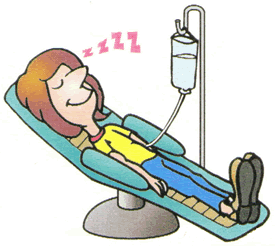
Have anxiety over visiting the dentist? You're not alone, and if you're struggling to make yourself visit the dentist for even simple routine cleanings then maybe you should consider sedation. Here's what you need to know: 

There are Different Levels of Sedation.
You don't have to be totally unconscious to reap the benefits of dental sedation. Many patients who fear the dentist also fear being completely out of control while sedated. Our office offers many options for sedation besides being completely knocked out. Oral sedation relaxes you while still giving you the ability to hear, understand, and respond. Our office provides Valium to patients who are nervous and wish to partake in oral sedation before a procedure. Nitrous oxide is also available as a form of dental sedation known "inhalation sedation". Just like oral sedation, you are relaxed while completely in control. Some patients liken the feeling of nitrous oxide to a glass of red wine. 

Your Insurance May Cover It.
Some dental insurances cover sedation during dental procedures, check with yours to see if they do! Even if not covered by your insurance, nitrous oxide and oral sedation are very affordable.

Sedation Can Be Used During Literally Any Dental Procedure.
If even the thought of going to the dentist makes you nervous then you still have the option of sedation during a routine cleaning or simple filling. Since dental sedation is completely safe it is beneficial for nervous patients to opt for nitrous oxide during any procedure, even routine cleanings, instead of avoiding the dentist completely. 

A Family Dental Care Center: Dr. Seth Rosen, DMD
2030 West Main Street, 
Norristown PA 19403

Friday, October 12, 2012

Use it or Lose it!

Take Advantage of Your Benefits Before They Reset in January! 
What You Might Not Know About Your Dental Insurance Plan.


If you have dental insurance then your benefits will expire on the last day of 2012. The money you have put all year toward your dental insurance deductible will disappear and you will have to restart on January 1, 2013. To some, this may be infuriating. Maybe you put all this money toward dental insurance and all you've gotten out of it was one cleaning, or maybe you started a treatment plan earlier in the year and the time has really gotten away from you. Either way, the good news is there's still time to take advantage of your dental benefits before they run out.

If you have unfinished treatment, or you've been putting off that root canal, you will save money in the long run if you have it completed before the end of the year. This is because the money you've invested toward your deductible will have reduced your out-of-pocket expense, but only until the end of the year. Don't let the money you've already put toward your insurance deductible for treatment go to waste!

When was the last time you had a cleaning? If it's been more than six months make an appointment before the end of the year! Many insurance companies pay 100% of your dental cleanings and checkups twice a year.

Many dental insurances pay between $1000-$1500 a year for treatment. Check with your dental insurance company to see how much you have left. If you have money left in your insurance account for 2012 then you should use it before you lose it! Get that cavity filled that you've been putting off or finally make an appointment to take off your temporary crown and have the permanent one placed. Some insurance companies even provide benefits for cosmetic dentistry! If you're part of the small percentage of people with adult orthodontic coverage then ask your dentist about Invisalign.

Get the most out of your dental insurance and save yourself money in 2012 by completing unfinished treatment plans by December 31st! Make sure to take advantage of your dental insurance benefits before the end of the year and make an appointment today. Call your dentist well ahead of time to ensure that you will get an appointment before January!

Call us at 610-631-3400 or visit us online to make an appointment using our online scheduler!

Family Dental Care Center
2030 West Main St., Norristown, PA 19403

Friday, October 5, 2012

Periodontal Disease FAQs

FAQs and Treatment of Gum Disease!


What is Gum Disease? 
Gum disease, or periodontal disease, is a chronic infection of the gums, ligaments and bone that support the teeth and anchor them in the jaw. 

What Causes Gum Disease? 
Bacteria are normal inhabitants of the mouth living in a thin film called plaque. Brushing and flossing help get rid of plaque. Plaque that is not removed can harden and form “tartar”, a hard mineral shell, that brushing can’t remove. Only a professional cleaning by a dentist or hygienist can remove tartar. When plaque builds on the tartar surface, it irritates and erodes healthy gum tissue. This early stage of gum disease is called gingivitis. If left untreated, pockets begin to form between the teeth and gum tissues. When the supporting bone becomes badly eroded, tooth loss can result. This stage is called periodontitis.

What are the Symptoms?
Red, swollen, or tender gums
Bleeding while brushing, flossing, or eating
Gums shrinking or pulling away from teeth
Persistent bad breath

How Is Gum Disease Treated?
The main goal of treatment is to control the infection. The number and types of treatment will vary, depending on the extent of the gum disease. Any type of treatment requires that the patient keep up good daily care at home. In the early stages of gum disease, treatment usually involves removing the plaque and calculus in the pockets around the tooth and smoothing the root surfaces. This is called scaling and root planing. In combination with proper daily home care, this is all that is usually required to stop the development of the disease. If you wait until the symptoms are more advanced, a referral to a periodontist may be necessary, and in some cases, surgical treatment.

Deep Cleaning: Scaling and Root Planing
Plaque is removed through a deep-cleaning method called scaling and root planing. 
Scaling cleans off the tartar from above and below the gum line. Root planing gets rid of rough spots on the tooth root where the germs gather, and helps remove bacteria that contribute to the disease. Medications, such as antibiotic gels, may be used with treatment. 

What Can I Expect After Treatment? 
You may experience some sensitivity to the teeth and gums immediately following your treatment. Any discomfort can be controlled with OTC pain relievers such as ibuprophen. 

Will My Insurance Cover Treatment?
Most dental insurance programs cover most or all of the cost of gum disease treatments. It is important that you check with your insurance carrier to find out what they provide. 

A Family Dental Care Center: Dr. Seth Rosen, DMD
2030 West Main St., Norristown, PA 19403